Who the Program Is For
Doctoral research at AAIRL runs full-time, typically 3–4 years. Admission requires a completed thesis-track M.Sc. or M.A. with a strong academic record.
- Duration: typically 3–4 years, full-time research
- Requires a completed thesis-track M.Sc. (or equivalent) with a strong academic record; exceptional candidates without one are welcome to reach out to discuss options
- Registered through Ariel University's School of Advanced Studies, the School of Architecture, with possible collaboration with the Faculty of Engineering (Industrial Engineering or Civil Engineering).
- A research proposal is developed and reviewed early in the program, ahead of the main research and dissertation-writing phase
- Cumulative, paper-based dissertations (built from published or submitted articles) can be arranged through the university's graduate authority
- Close supervision within an active, funded research project
Research agenda
AAIRL focuses on concrete challenges in urban design and planning where AI can extend human capability. Dissertation topics are typically drawn from one of these directions:

Conducting research at the Architectural Artificial Intelligence Research Lab (AAIRL) has been an incredibly defining experience. The lab provides not only access to high-performance computing resources but also the intellectual freedom to push the boundaries of what is possible. Through the lab's mentorship, I have been able to bridge computer science with architectural theory, openly share my ideas, and develop real-world experimental frameworks. The lab provides phenomenal advocacy and consistently pushes its students to elevate their technical work into meaningful scientific contributions. What truly sets AAIRL apart is its culture: researchers are treated as partners and are fully supported in translating innovative ideas into top-tier publications. The lab has supported me through every step of my journey, and I am deeply grateful for the opportunity to work in such an exceptional environment.
Yaswanth Alla
Ph.D. student at AAIRL



About the lab
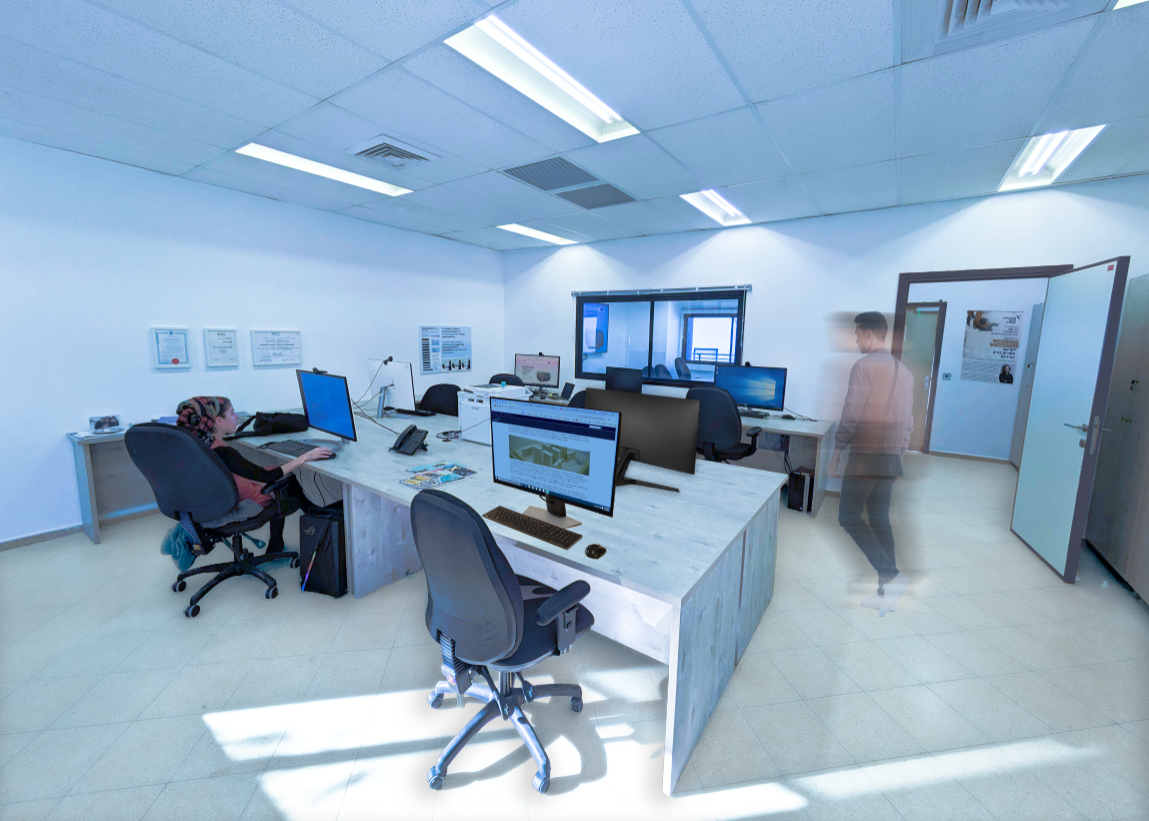
AAIRL (Architectural Artificial Intelligence Research Laboratory) is a research unit within Ariel University's School of Architecture, led by Dr. Jonathan Dortheimer. The lab develops computational methods for architectural design, urban analysis, and participatory planning, combining machine learning, human-computer interaction, and urban research.
Research agenda Research agenda

FAQ
Who is this track for?
Graduates with a completed thesis-track M.Sc. (or equivalent) in architecture, urban planning, engineering, computer science, or a related field, who want to pursue full-time, in-depth research at the intersection of AI and the built environment.
How long does it take?
Typically 3–4 years of full-time research, following Israel's CHE framework for doctoral studies.
Do I need a completed M.Sc.?
Yes, in almost all cases — a completed thesis-track M.Sc. (or equivalent) with a strong academic record is required. If you don't have one but have an outstanding academic background, contact us to discuss whether an alternative path is possible.
Which department will I be registered in?
AAIRL is based in the School of Architecture. Ph.D. candidates are registered through Ariel University's School of Advanced Studies and the School of Architecture, with possible collaboration with the Faculty of Engineering (Industrial Engineering or Civil Engineering). Your exact registration path is confirmed with the School of Advanced Studies before admission.
Can the dissertation be based on published papers?
Yes — cumulative, paper-based dissertations are common in the lab and can be arranged through the university's graduate authority.
How do I apply?
Email Dr. Jonathan Dortheimer with your CV, M.Sc. thesis (or a summary), and transcripts (subject line "Ph.D. Application"), including your research interests, relevant skills, and target start date. See the How to Apply section above.
Is funding available?
Scholarships from the university's School of Advanced Studies are available to both M.Sc. and Ph.D. students, and the lab offers additional scholarships to students who take part in its ongoing research projects — on top of project research stipends tied to the lab's active grants and competitive national doctoral scholarships. Funding arrangements vary by project and candidate background and are discussed individually with the advisor before admission.
Interested in more details on doctoral research?
Contact us Contact us